



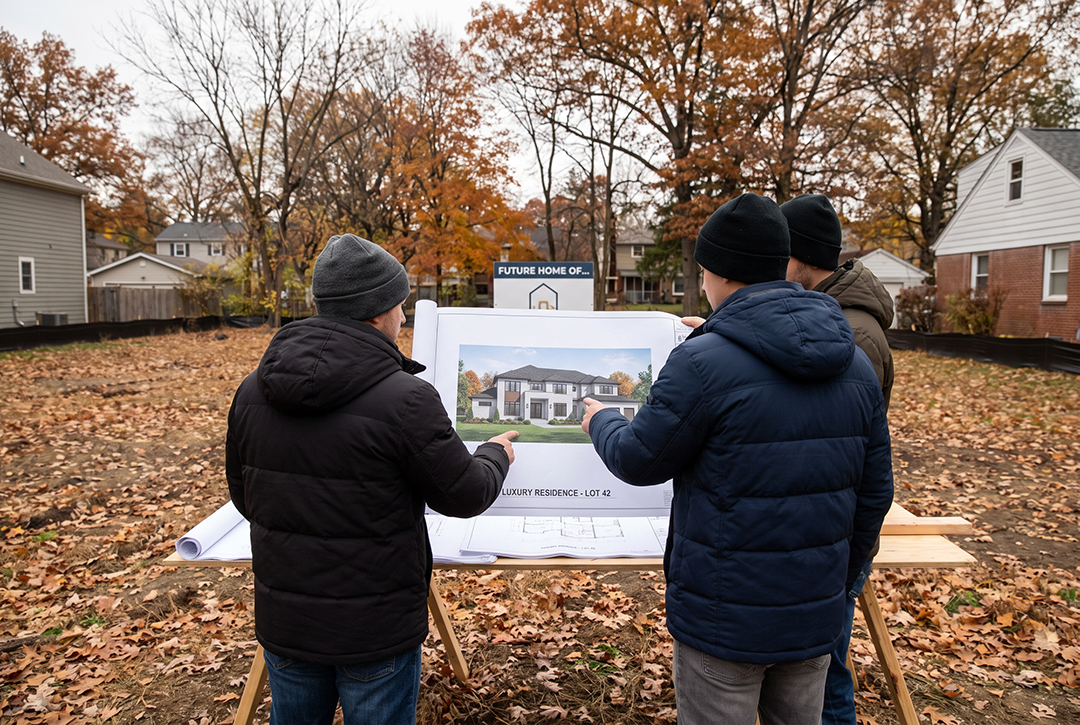
If You’re Thinking About Building in 2027, September Is the Real Start Date
Every spring we hear a version of the same sentence: “We want to break ground as soon as the snow melts.” That instinct makes sense in Minnesota. Longer days feel like momentum. The yard comes back to life. It seems like the natural moment to start. By then, though, the work that actually determines whether a 2027 build stays on track is already late.
Custom homes and major remodels are not summer projects that begin when the weather turns. They are planning projects that begin months earlier. In the Twin Cities, September is usually the real start date — even if no one puts a shovel in the ground until next year.
The myth that costs people a season
March and April feel productive. The problem is what has to happen before a crew can show up.
A thoughtful custom project typically needs time for:
- Discovery conversations about lifestyle, budget, and must-haves
- Site evaluation, survey work, and soil or drainage review
- Concept design and revisions
- A real budget, not a hopeful number
- Architectural drawings and engineering
- Interior selections that affect structure, mechanicals, and lead times
- Permitting and municipal review
That work does not compress neatly into a few warm weeks. When families wait until spring to “get serious,” they often land in the busiest part of the year — competing for the same trades, the same window packages, and the same inspection calendar as everyone else who had the same idea. Starting the conversation in September does not rush the project. It protects it.
What fall is actually good for
Fall is one of the most useful seasons in a Minnesota custom build, and it is rarely because of framing weather.
The site tells a clearer story. After the leaves drop, topography, drainage paths, neighboring views, and tree canopies are easier to read. A lot that looked charming in July can look very different in October. That is valuable information before the floor plan hardens.
Design time is quieter and better. Fall meetings happen before holiday hosting takes over the calendar and before spring urgency sets in. Clients have room to think. That is when the best decisions get made: how the house should live, where the light should land, whether the lower level needs a walkout, how the entry should handle wet boots and school drop-off.
Budgets get honest sooner. Material and labor realities are easier to face when there is still time to adjust the plan. The goal is not the lowest first number. It is a scope the house can actually be built to.
Permitting can work in the background. Municipal review does not pause just because the jobsite is frozen. A fall start on drawings often means winter can be used productively instead of wasted.
This is the same reason winter construction is realistic here. We build through Minnesota winters every year. The projects that stay on schedule are the ones that were planned before the ground froze, not the ones that tried to invent a timeline in April.
The Minnesota calendar, working backward from 2027
If the goal is to be in a new or newly renovated home in 2027, the calendar is more predictable than most people expect.
September–November 2026: Define the project. Walk the lot. Talk through lifestyle, budget, and constraints. Begin concept design.
Winter 2026–2027: Refine plans, lock major systems and exterior materials, complete construction documents, and submit for permits.
Early building season 2027: Move into site work and structure with a plan already in place, instead of still debating window packages while the crew is waiting.
Later in 2027: Finish interiors and site work on a timeline that was designed, not improvised.
Every house is different. A full custom build, a teardown, and a live-in remodel do not share the same duration. What they do share is this: the decisions that take the longest are almost never the ones people picture when they imagine construction. They are the decisions made at a table, on a lot, and in a selections meeting. September is when those decisions still have room.
The choices that get expensive if you wait
A custom home is a series of connected choices. Wait too long on one, and three others move with it.
The lot comes first. Soil, slope, setbacks, utilities, and orientation shape the foundation, the lower level, the driveway, and the light inside the house. A beautiful floor plan on the wrong piece of land is still the wrong house. Then come the performance decisions Minnesota does not forgive: insulation strategy, window type, siding, roof details, and how the house handles freeze-thaw, snow load, and spring melt. These are not finish selections. They affect comfort, energy use, and how the house ages.
Indoor-outdoor living belongs in that same early conversation. A four-season porch, a true mudroom, a covered patio, or a walk-out that actually gets used in October only works if the structure, mechanicals, and grading are designed for it from the beginning.This is also where builder’s fees and contract structure matter. A clear process in the fall prevents the spring scramble of comparing numbers that are not actually comparable.
If this is a remodel, the same window still applies
Not every client is starting from a vacant lot. Many of the best fall-planning conversations we have are about houses people already love.
Fall is a strong time to evaluate whether the right move is a targeted renovation, an addition, or a more complete rethinking of the house. You can live in the home, see how it functions during back-to-school season, and identify the rooms that fail first: the entry, the kitchen during weeknights, the lack of a guest suite, the disconnected backyard.
A live-in remodel benefits from sequencing. Envelope and mechanical work can be planned before the hardest stretch of heating season. Design work can happen while the household still has a predictable routine. Waiting until everyone is ready to “just start” in May usually means living through the most disruptive phases at the most crowded time of year.
A simple 90-day plan
If 2027 is the year, the next three months do not need to be complicated.
Month 1: Get clear. What has to be true about the house? What is the budget range? Are you building new, renovating, or still deciding? Walk the property with a builder who knows how Minnesota sites actually behave.
Month 2: Get specific. Move from ideas to a concept and a preliminary budget. Identify the constraints that will drive cost: grade, utilities, existing structure, material direction, and timeline.
Month 3: Get ready. Refine the plan, begin the drawing process, and map the decisions that need to be locked before permitting. The goal is not to finish every tile choice before Thanksgiving. The goal is to stop guessing.
By the time January arrives, you should know what you are building, why it costs what it costs, and what the next twelve months need to look like.
September is the meeting. 2027 is the house.
The families who feel calm during construction are rarely the ones who waited for perfect weather. They are the ones who used the quieter months to make the important calls.
If you are thinking about a custom home or a major remodel next year, you do not need to have every answer today. You need a starting point while there is still time to design the project on purpose. That starting point is a conversation.
Contact Urban Edge Homes to schedule a fall planning meeting. We will walk through the lot or the existing house, talk honestly about scope and timing, and help you understand what has to happen now so 2027 is a build year — not another year of “maybe next spring.”


